Seasonal jobs with housing solve the hardest part of a season in one move. You skip the rental search, the deposit, and the scam risk. But "housing provided" can mean anything from a private room with a kitchen to a bunk in a four-person dorm that eats a third of your paycheck, and the details usually come up after you've accepted.
Ask these eight questions before you say yes. Get the answers in writing, in the offer letter or an attached housing agreement.
The offer and the money behind seasonal jobs with housing
1. Is housing guaranteed, or "may be available"?
Read the posting carefully. Some say housing is provided. Others hedge. Several of Park City Mountain's winter postings, for example, say "Housing May Be Available". That isn't a promise.
If it's conditional, ask when you'll know and what happens if the answer is no. "We'll confirm a bed by November 1" is something you can plan around. "We'll see" means you should start your own housing search now.
2. What does it cost, and how is it paid?
Get the weekly cost and the method. Employer housing is often paid by payroll deduction. At Yellowstone National Park Lodges, for instance, room and board are deducted automatically from each paycheck.
The law limits what an employer can do here, and it helps to know the outline. When an employer counts housing toward your wages under federal law, the Department of Labor caps the credit at the reasonable cost of the lodging or its fair value, whichever is less. "Reasonable cost" can't be more than what the employer actually pays and can't include a profit. The housing also has to be voluntarily accepted and primarily for your benefit.
States can be stricter. In Colorado, a lodging credit against the 2026 minimum wage of $15.16 an hour needs a written agreement, has to be voluntary and mainly for your benefit, and is capped at $25 or $100 a week depending on the type of lodging.
You don't need to work out which rule applies before you accept. Just ask for the weekly number and get it on paper. If your paycheck later looks wrong, that document is what your state labor department will ask to see.
3. What does that price include?
The same weekly figure can cover very different things. Yellowstone's dorm deduction covers room, utilities, laundry facilities, limited internet, and three meals a day in the employee cafeteria. You bring your own pillow and toiletries. Other employers charge for the room only, so food is on you, and grocery prices in remote resort towns add up fast.
Ask specifically about meals, utilities, Wi-Fi, laundry, bedding, and parking. When you compare seasonal jobs with housing, compare what's included, not just the weekly number. A cheaper room without meals can cost more by the end of the season than a pricier one with them.
The room itself
4. How many people per room, and what's the bathroom setup?
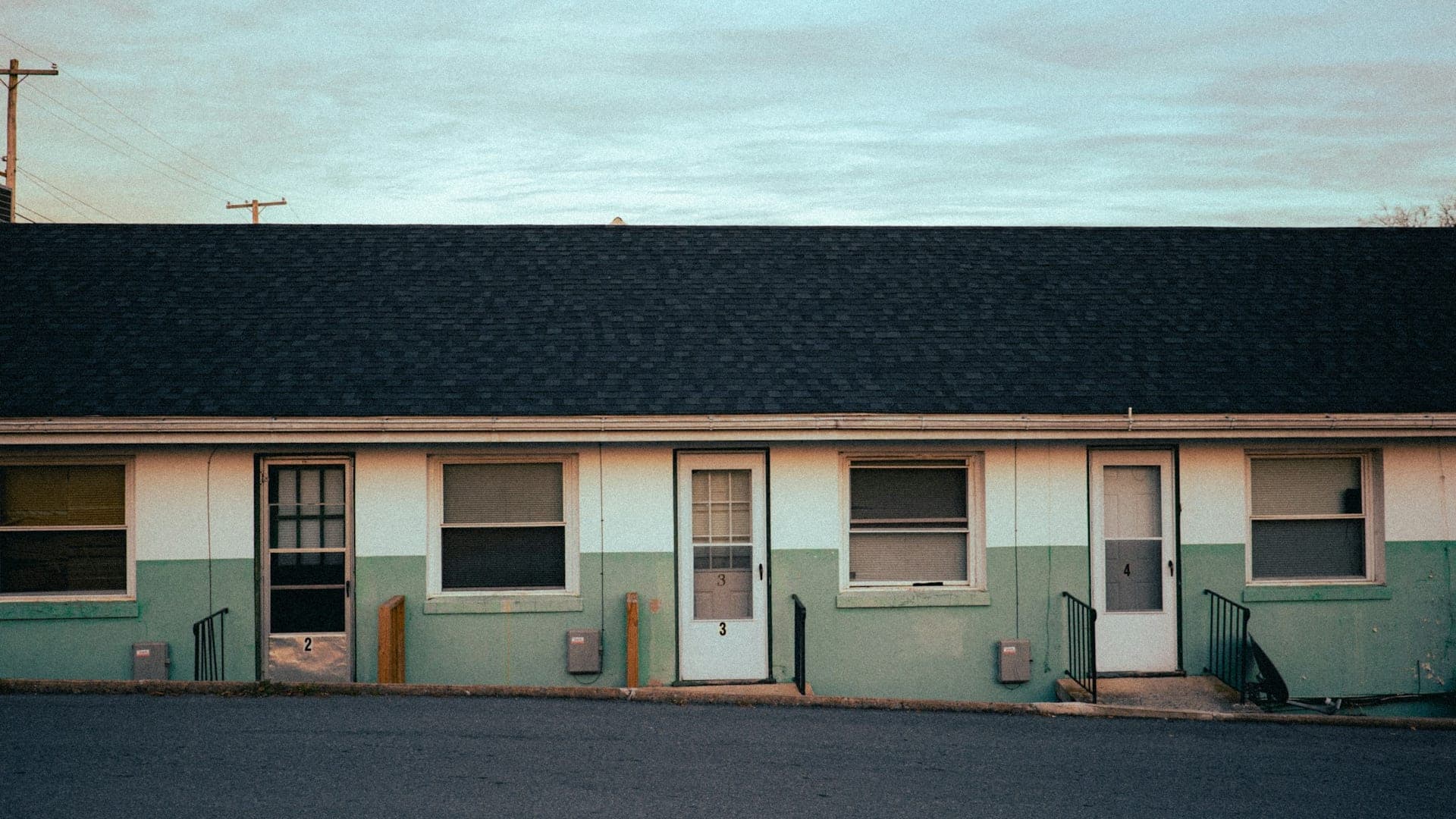
Shared rooms are normal. At Yellowstone, every employee has at least one roommate, singles aren't offered, and most dorms have community bathrooms shared by the whole building. Some rooms are set aside for couples.
None of that is a dealbreaker if you know it going in. Ask how many people share a room, whether you can request a roommate, how bathrooms work, and what the house rules are on quiet hours, guests, and pets. Yellowstone's dorms are pet-free except for service animals, and quiet hours vary by building.
5. What are the move-in and move-out dates?
Housing dates don't always match job dates. If training starts November 15 but the dorm opens November 17, you need two nights somewhere. If the season ends April 12 but you have to be out on April 10, you need a plan for those days too.
Ask for exact move-in and move-out dates. Ask whether you can arrive early or stay a few nights after the season, and what that costs.
If things change mid-season
6. What happens to your housing if the job ends early?
This is the question people skip, and it matters most. If you quit, get let go, or the season ends early because of weather, how long do you have to move out? Do you get back any prepaid rent or deposit?
The answer depends on your state's law and your situation, which is why it needs to be in writing. Alaska is a good example of how specific it gets. Its landlord-tenant act excludes an employee whose right to live there depends on the job, but only when the work is substantially services, maintenance, or repair to the premises itself. A cook in a lodge bunkhouse may be in a different position than a caretaker. If you get into a dispute over employer housing, your state's tenant-rights office or legal aid can tell you which rules apply.
7. Is the housing optional?
Under federal rules, housing that counts toward your wages has to be voluntarily accepted. Ask whether you can live somewhere else, and whether your pay changes if you do.
Even if you plan to take the housing, the answer is useful. It tells you whether the deduction is a convenience or a condition of the job, and it gives you a way out if the room turns out to be a bad fit.
8. Who pays to get you home?
Unless your offer says otherwise, assume the trip home is on you, and budget for it. Alaska is an exception. If your employer provided or paid for your travel to the job, the Alaska Department of Labor says it generally has to pay your return to the place of hire when the job ends. The exceptions include being fired for fighting, intoxication, false application information, or three consecutive unexcused absences. If you quit, you're covered only if the employer misrepresented the wages or conditions, or you left over a health or safety problem.
If you're heading to a summer job in somewhere like Juneau, ask whether your travel is employer-paid and get that in writing too.
Signs to slow down
- The employer won't put the housing cost in writing.
- The deduction goes up after you arrive.
- You're told the room is "first come, first served" after you've already accepted.
- Housing is described only as "shared accommodations," with no headcount or photos.
If those come up, it's reasonable to keep looking. Employer housing is one route, not the only one. You can browse seasonal jobs by town and compare offers, or look at a gateway town like Gardiner, at Yellowstone's north entrance, where jobs and housing listings sit on the same page. If you end up renting privately instead, read how to avoid rental scams when you move for a seasonal job before you pay anyone.