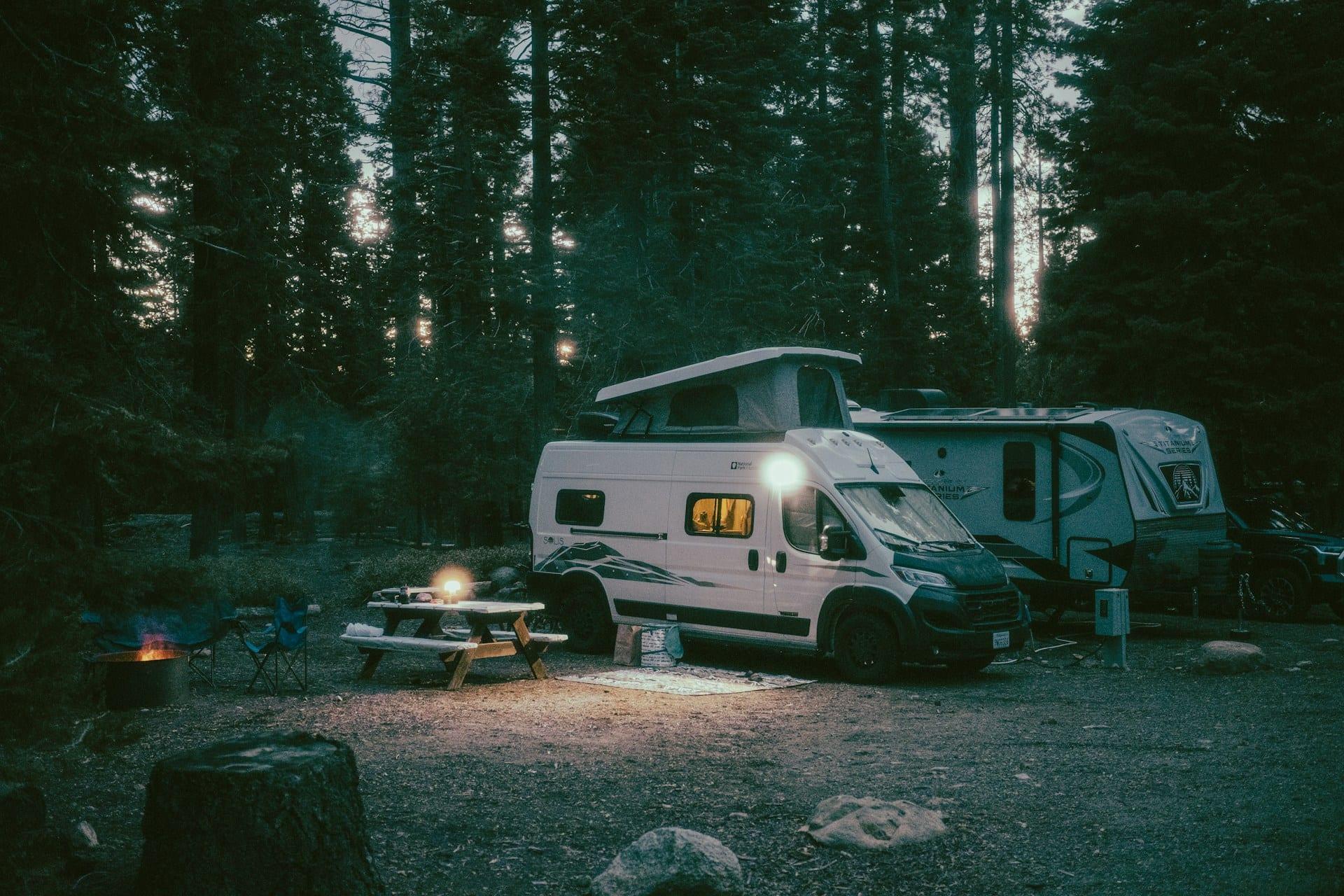
Bringing your own RV or van can solve housing in towns where rooms are scarce. But the rig isn't the hard part. The spot is. Before you count on an RV spot for a seasonal job, know that public land won't cover a whole season, that many towns ban sleeping in vehicles on their streets, and that the details of a spot (hookups, amps, winter water) decide whether it actually works.
Public land won't last a whole season
Free camping on national forest land comes with stay limits, and they're written to stop exactly what a seasonal worker needs, which is staying put for months.
The rules vary by forest:
- White River National Forest (Colorado ski country): a maximum of 14 days within a 30-day period. After that you have to move outside a 20-mile radius, and "residential use is not permitted."
- Caribou-Targhee National Forest (Idaho and Wyoming): no camping within the same five-mile radius for more than 14 days in any 30 consecutive days, and no moving back within that radius for 30 days.
Some forests have shorter limits or designated sites only, so check the specific forest's rules. Plan on public land as a bridge for your first week or two, not as your housing.
Town rules on sleeping in vehicles
Inside town limits, the rules usually get stricter. Mammoth Lakes, California, is one example. Its municipal code bans camping in vehicles on public streets, parking lots, rights-of-way, and parks. In February the Town Council looked at a safe-parking program on private lots for people living in vehicles, but it was only a proposal at that point.
The surrounding area doesn't offer much of a fallback either. About 94% of Mono County is public land, where dispersed camping is limited to 14 days at a time or 28 days a year.
Two takeaways for any town:
- Read the town code on vehicle camping before you arrive.
- On private property, get the owner's permission in writing, with dates and the price. If the town ever asks, that's what you show.
What to ask about an RV spot for a seasonal job
A spot is a lease in everything but name. Ask these before you commit.
Hookups. "Full hookups" usually means electric, water, and sewer. "Partial" is typically electric and water. "Electric only" means you're hauling water and dumping tanks yourself. Know which one you're getting and how often you'd need to dump.
Amperage. RVs are built for 30-amp or 50-amp service. According to Camping World's explainer, 30-amp service supplies up to 3,600 watts and uses a three-prong plug. 50-amp supplies up to 12,000 watts and uses a four-prong plug. Adapters let you connect a 50-amp rig to a 30-amp post, but you're limited to 3,600 watts, which matters when you're running a heater, a microwave, and a hot water heater together.
How electric is billed. Is power included in the price, or metered and billed separately? In a winter job with an electric heater running, metered power can add up.
Winter-ready hookups. For a ski season, ask whether the water and sewer connections are set up to keep working in freezing temperatures. A spot that's fine in July can leave you without water in January.
Length, parking, amenities. Check the maximum RV length the spot fits, whether there's room for a second vehicle, and whether restrooms, showers, laundry, or a dump station are on site.
Dates and price in writing. Monthly rate, deposit, move-in and move-out dates, and what happens if your job ends early.
TurnSeasons RV and van spot listings show these details up front: hookups, amperage, maximum RV length, whether hookups are winter-ready, and on-site amenities. You can compare spots before you message anyone. Treat an RV spot like any other rental and read how to avoid rental scams when you move for a seasonal job before you pay a deposit to someone you haven't met.
Living in it safely
Carbon monoxide is the serious risk of living in a small space with fuel-burning appliances. The CDC's prevention guidance applies directly:
- Put a battery-powered or battery-backup CO detector near where you sleep, and check it regularly.
- Never run a generator inside, and keep it outside, more than 20 feet from windows, doors, and vents. That includes your RV's own windows and vents.
- Don't use portable gas camp stoves or flameless chemical heaters indoors.
Ask your employer first
Before you look anywhere else, ask your employer whether it has RV sites, a lot you can use, or a park it sends staff to. If housing is part of the offer, the questions to ask before you accept a job with housing apply to RV spots too. Then browse seasonal jobs by town and check the town's page on TurnSeasons' city list for RV and van spots alongside rooms.